Keratin Complex Ecommerce Website Case Study

Two connected websites had become difficult to maintain. Slow pages, broken product links, checkout failures, and recurring stylist login problems interrupted purchases and made routine changes risky.
On this page
The baseline reported in the web development case study
Reported within the first three months
A 1.5-percentage-point increase, or 1.75 times the starting rate
The source's reported window, not a claimed development duration
Ecommerce conversion improvement, from account access to order processing
Keratin Complex’s reported conversion rate increased from 2% to 3.5% within three months after we addressed problems across its consumer and professional ecommerce websites. That is a 75% relative increase, or 1.5 percentage points.
This ecommerce website case study starts with a practical problem: customers and stylists could not reliably complete a purchase. We repaired recurring login failures and broken purchase flows, connected inventory updates, and stabilized the backend while preserving existing SEO tagging.
The figures describe the historical project documented in Simplicity Media’s web development case study. Exact project dates, traffic totals, and revenue results are not supplied. See the source and measurement notes.
Keratin Complex case study: the short version
| Question | What the project record shows |
|---|---|
| Who was the client? | A professional haircare brand serving consumers and more than 10,000 stylists worldwide at the time described. |
| What was broken? | Two websites with slow pages, broken product links, purchase failures, and repeated stylist login problems. |
| What did Simplicity Media address? | Account access, CRM information, stock availability, order processing, and backend stability. |
| What happened to conversion? | The reported rate rose from 2% to 3.5% within the first three months. |
| What happened to SEO? | The source reports that existing SEO tagging and structure were preserved during development. It does not report a ranking or traffic increase. |
| What is not disclosed? | Platform and integration vendors, project dates, development duration, traffic volume, revenue, and separate consumer versus stylist conversion rates. |
The challenge: two buying experiences with recurring failures
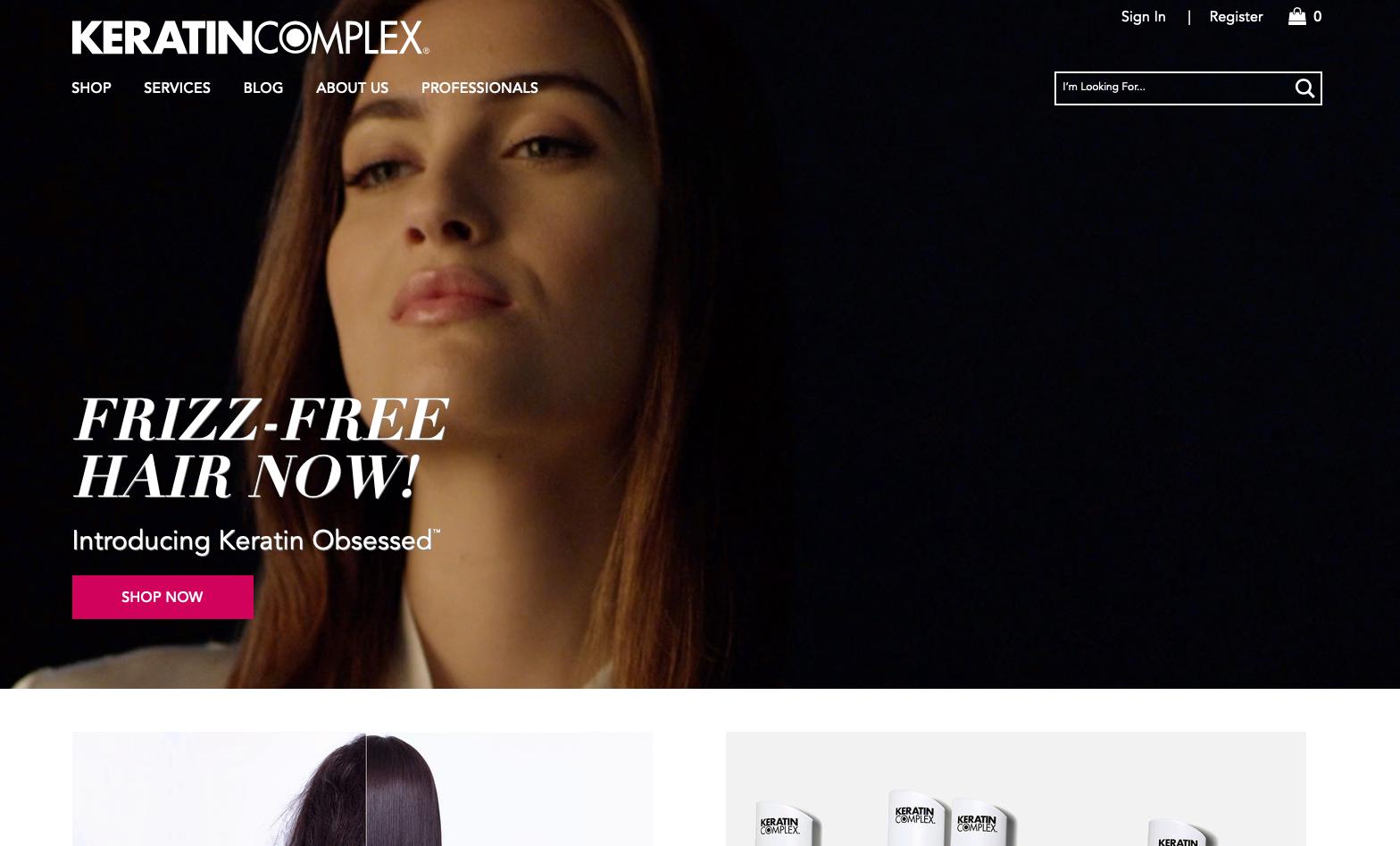
Keratin Complex needed to support people buying haircare for themselves and professionals ordering for their work. The brand’s official website still distinguishes at-home shopping from its professional offering. That public context helps explain the two audiences; it is not independent verification of the historical project results.
At the time covered by the source, the consumer site suffered from slow loading, broken product links, and low conversion. Stylists encountered similar problems plus recurring login failures. Some had to register again to regain access.
Maintenance had become part of the problem. Fixing one area could break another, making even routine product and page updates risky. The project needed to restore the purchase journey and make the underlying system dependable enough to keep operating.
From fragmented ecommerce to a stable purchase journey
The work covered site repairs, inventory, and order processing. These are project stages, not release dates; three months is the source’s conversion measurement window.
A reported 2% conversion rate alongside unreliable purchase flows and recurring account-access problems.
SourceWeb development case study, background and results
Resolve login and checkout problems and stabilize the code while retaining existing SEO tagging.
SourceWeb development case study, account access and backend improvements
Update stock availability automatically and connect purchases to shipping, with account and pending-order information in the CRM.
SourceWeb development case study, inventory, CRM, and order processing
The reported conversion rate reached 3.5%, up from 2%.
SourceWeb development case study, reported conversion results
What changed across the ecommerce experience
Restore stylist login and useful account information
The professional website needed to recognize returning buyers reliably. Login repairs removed the repeated registration problem described in the source. The backend CRM also tracked pending orders, location, and account status so the brand could manage stylist accounts with the relevant information available.
This is the B2B ecommerce dimension of the project: the ordering experience depends on account access as well as product discovery. The source does not identify the CRM vendor or describe a new pricing or permissions system, so neither is claimed here.
Baymard Institute’s checkout usability research identifies account selection and password requirements as potential purchase barriers. It provides independent context for reviewing login friction, not an audit of Keratin’s implementation or a prediction of its conversion lift. Professional account requirements still need to be evaluated separately from consumer guest checkout.
Keep product availability connected to inventory
Product availability was updated automatically, showing an item as sold out when its inventory ran out. That connected the storefront’s availability message to the stock position and addressed the risk of accepting orders for unavailable products.
The record describes real-time updates but supplies no synchronization latency or measured oversell rate. The operational change is documented; a numerical reduction in stock errors is not.
Repair ecommerce checkout and the handoff to shipping
We repaired the checkout problems affecting the sites and connected completed orders to shipping automatically.
For ecommerce conversion rate optimization, the order needs to complete and reach the operation that fulfills it. The source reports that this flow was repaired, without providing delivery-speed or fulfillment-cost figures.
Stabilize the backend and retain existing SEO tagging
The codebase was strengthened so that new pages and product updates no longer caused the unexpected errors described in the original setup. Existing SEO tagging and structure were maintained during development.
Preserving those elements is different from proving that rankings increased or that every search signal remained unchanged. The case study supplies no organic traffic, ranking, or Search Console comparison. Its documented outcome is continuity of the existing SEO setup through the development work.
Results: 75% relative lift, not a 75-point increase
| Measure | Before | Reported outcome |
|---|---|---|
| Conversion rate | 2% | 3.5% within three months |
| Absolute change | Baseline | +1.5 percentage points |
| Relative change | Baseline | +75%, calculated as (3.5 - 2) / 2 |
| Account and checkout problems | Recurring failures | Reported resolved |
| Inventory availability | Part of the fragmented experience | Automatic stock availability updates |
| Existing SEO tagging | Existing setup | Preserved during development |
The 1.75x headline in the original document expresses the same rate change. It does not establish 75% revenue growth, 75% more orders, or a particular return on development spend. Those outcomes would require traffic, order-value, revenue, and cost records.
The source also does not define the analytics denominator, give sample sizes, split the result between the two sites, or document a controlled experiment. The defensible claim is the reported before-and-after conversion-rate improvement across the project, not a separately measured effect for each repair.
What ecommerce teams can take from the project
A purchase journey can lose customers before checkout, including at account access or a broken product link. Here, improvements extended through stock availability and order processing. The work addressed the experience of buying and the operational dependencies behind it together.
For a similar project, record the baseline conversion definition and test the full path for each customer type: sign in, find an available product, complete an order, and verify its fulfillment handoff. Preserve the existing SEO setup while evaluating any proposed changes separately.
The Ashley Black ecommerce case study covers a different buying challenge: launching an unfamiliar product while developing audiences and paid media. Its revenue and acquisition figures belong to that campaign, not this website project.
Questions about the Keratin Complex project
How much did conversion improve?
The reported rate rose from 2% to 3.5% within three months. That is a 75% relative lift, a 1.5-percentage-point increase, or 1.75 times the starting rate.
Was this a consumer or B2B ecommerce project?
Both audiences were involved. The source describes a consumer website and a professional stylist website, with recurring login problems specifically affecting the stylist experience. It does not publish separate conversion results for each audience.
Which ecommerce platform and CRM were used?
The source does not identify the vendors. The documented work covers account access, CRM information, inventory availability, order processing, and backend stability without attributing the result to a named platform.
Did the website work improve organic rankings?
The record says existing SEO tagging and structure were preserved. It does not supply a ranking or organic-traffic result, so this case does not claim one.
Was the whole website project completed in three months?
Three months is the reported conversion-improvement window. The source does not state the full development duration or exact project dates.
Sources and measurement notes
- Primary project record: Simplicity Media, Keratin Complex Case Study: Web Development, three-page client case study. Background appears on page 2; conversion, SEO, CRM, inventory, order processing, and stability outcomes appear on page 3.
- Calculation: (3.5% - 2%) / 2% = 75% relative lift; 3.5% - 2% = 1.5 percentage points.
- Brand context: Keratin Complex’s official website describes its consumer and professional offering. It is contextual evidence, not an independent audit of the project metrics.
- Limits: No exact project dates, analytics export, traffic totals, experiment design, platform names, revenue results, or audience-specific conversion breakdown were supplied. The publication date is not the project date.
Looking at similar purchase-path problems? Talk with Simplicity Media about the account, checkout, and measurement issues affecting your ecommerce experience.